
The UNESCO Chair at the University of Salerno at “Futuro Remoto 2026”: Peace Is Learned, the Future Is Built
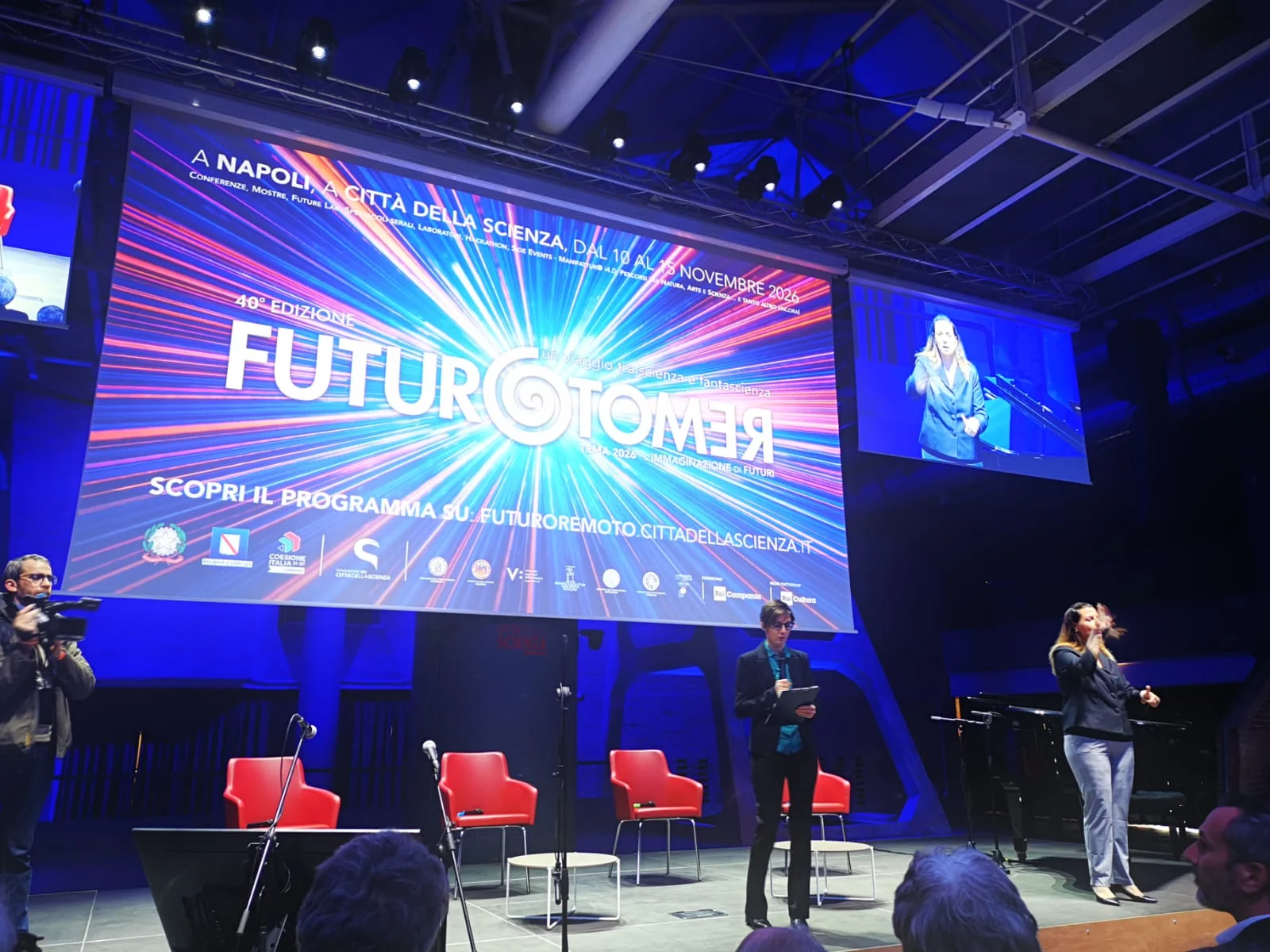
From World Science Day for Peace and Development to the workshop “Peace Can Be Learned: Generative Talents and Thinking Communities”: the contribution of Generative Pedagogy to the 40th edition of Futuro Remoto.
The UNESCO Chair in “Generative Pedagogy and Educational Systems to Tackle Inequality” at the University of Salerno, directed by Prof. Emiliana Mannese, took part in the 40th edition of Futuro Remoto, the science communication event organised by the IDIS Foundation – Città della Scienza, held in Naples from 10 to 15 November 2026.
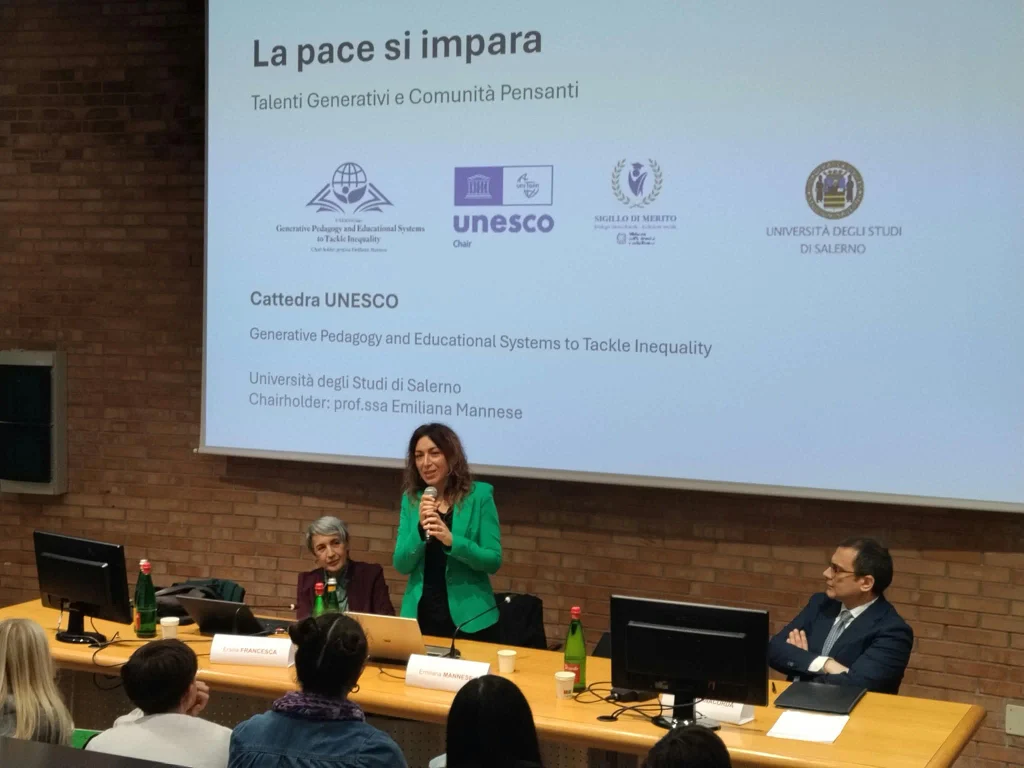
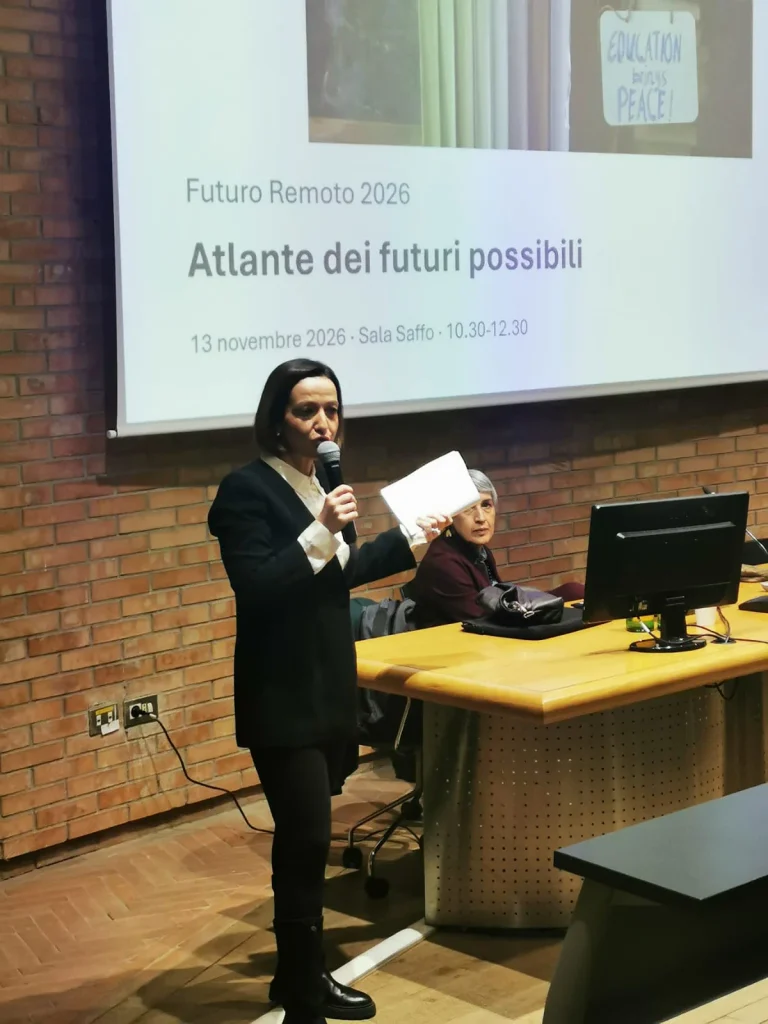
The Chair, represented by Maria Grazia Lombardi and Maria Ricciardi, participated on Friday 13 November 2026 with the conference and workshop titled “Peace Can Be Learned: Generative Talents and Thinking Communities”, dedicated to the relationship between education, peace, and talent development.
The 40th-anniversary edition, dedicated to the theme “Imagining the Future”, brought together universities, scientific institutions, researchers, schools and citizens, fostering discussion on the role of knowledge and imagination in shaping possible futures.
The opening ceremony, held on Tuesday, 10 November 2026, coincided with World Science Day for Peace and Development, promoted by UNESCO to highlight the contribution of scientific research to international cooperation and the building of peaceful societies. The 2026 observance, dedicated to the theme Common Ground through Science Diplomacy, highlighted the value of scientific knowledge as common ground for dialogue and collaboration among peoples, cultures and institutions.
Peace Can Be Learned: Generative Talents and Thinking Communities
In this context, the UNESCO Chair has proposed a reflection on the pedagogical conditions that make peace education possible, recognising that the development of talents and the building of Thinking Communities are two fundamental dimensions for promoting participation, responsibility and educational justice.
Peace is not merely a value to be transmitted, but an opportunity to be learned and constructed through educational experiences, relationships and participatory practices. Educating for peace means forming individuals capable of recognising others, engaging with a plurality of perspectives and assuming responsibility for communal life.
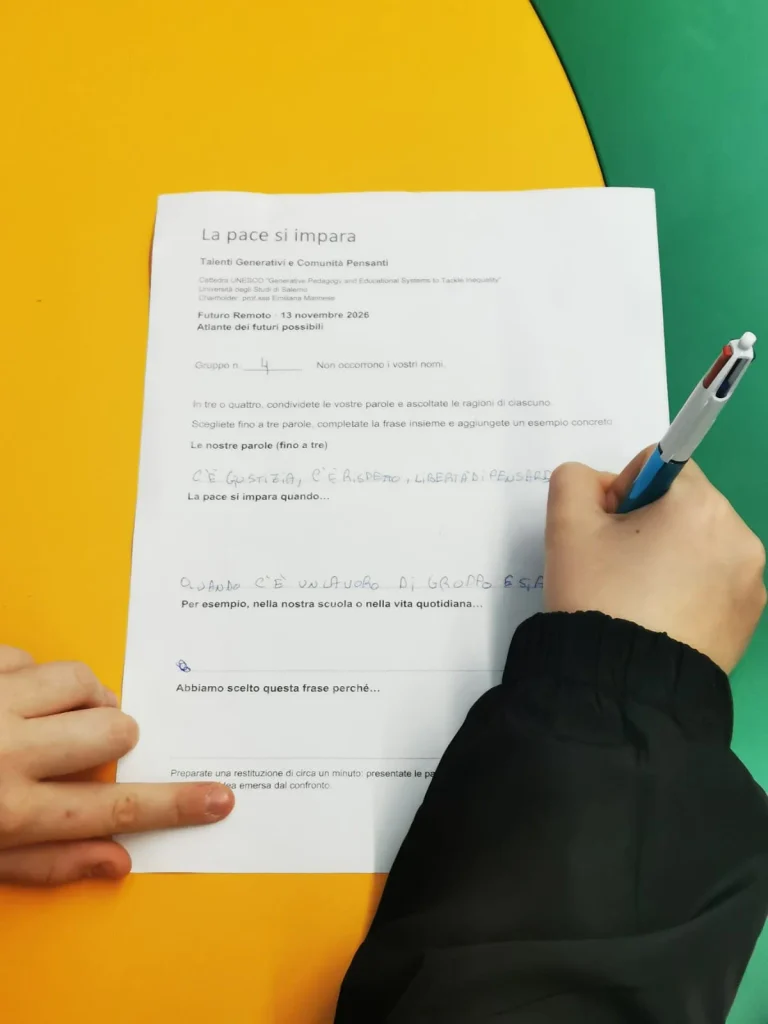
The workshop provided a space where pedagogical reflection and educational experience converged, focusing on the relationship between Generative Talents and Thinking Communities.
From the perspective of Generative Pedagogy, talents cannot be reduced solely to individual abilities to be identified or developed, but must be understood within the dynamic relationship between the individual, formative experiences and life contexts. Their development calls upon educational systems to take responsibility for creating effective conditions for learning, expression and participation.
From this perspective, Thinking Communities are spaces for the shared development of knowledge and meaning, where individual experiences contribute to the creation of collective possibilities for transformation.
Educating for peace, imagining possible futures
Participation in Futuro Remoto forms part of the scientific and “third mission” activities of the UNESCO Chair, which is committed to developing Generative Educational Systems and Thinking Communities to combat inequalities and promote educational justice.
The dialogue between the World Science Day for Peace and Development and the theme of imagining futures raises a clearly pedagogical question: what experiences, relationships, and educational conditions make it possible to learn how to build peace?
The 40th edition of “Futuro Remoto” provided an opportunity for dialogue between scientific research, education, and society, reaffirming the role of talent development and Thinking Communities in building futures grounded in responsibility, participation, and the possibility of individual and collective emancipation.

System to Tackle Inequality